Some moments stay with you long after you’ve left the room.
At the Women in Aesthetics Conference in London, the audience gathered expecting to hear stories of professional success, leadership and entrepreneurship. Instead, one talk shifted the atmosphere entirely.
The room fell silent.
Khatra Paterson, an aesthetic nurse and clinic founder, stood in front of a packed audience and shared something deeply personal. Not a business lesson or industry insight, but a story many people never hear spoken aloud.
Her story of surviving Female Genital Mutilation.
It was a moment of raw honesty and extraordinary courage. A reminder that behind every confident professional woman we meet, there may be a story of resilience that shaped the path she walks today.

Khatra Paterson with her 10-year-old self
A Hidden Global Issue
Female Genital Mutilation, often referred to as FGM, is a practice that affects millions of girls worldwide. According to global estimates, more than 230 million women and girls alive today have been subjected to the procedure, many of them before the age of fifteen.
Every year, an estimated four million girls are still at risk of being subjected to FGM.
The procedure involves the partial or total removal of the external female genitalia for non-medical reasons. It has no health benefits and can cause severe physical and psychological harm, including chronic pain, infections, complications during childbirth and long-term trauma.
FGM is often misunderstood as a practice linked to one religion or culture. In reality, it exists across different communities and belief systems. Experts stress that it is a deeply rooted cultural practice driven by social pressure and gender inequality, rather than a requirement of any faith.
Although FGM is most commonly associated with parts of Africa, the Middle East and Asia, it is also present in diaspora communities across the world.
“Around four million girls are at risk of female genital mutilation every single year.”
In the UK alone, it is estimated that more than 137,000 women and girls living in England and Wales have undergone FGM.
The practice has been illegal in the UK since 1985, and it is also illegal to take a girl abroad for the procedure.
Yet despite legislation and increased awareness, it remains a subject many people still feel uncomfortable discussing.
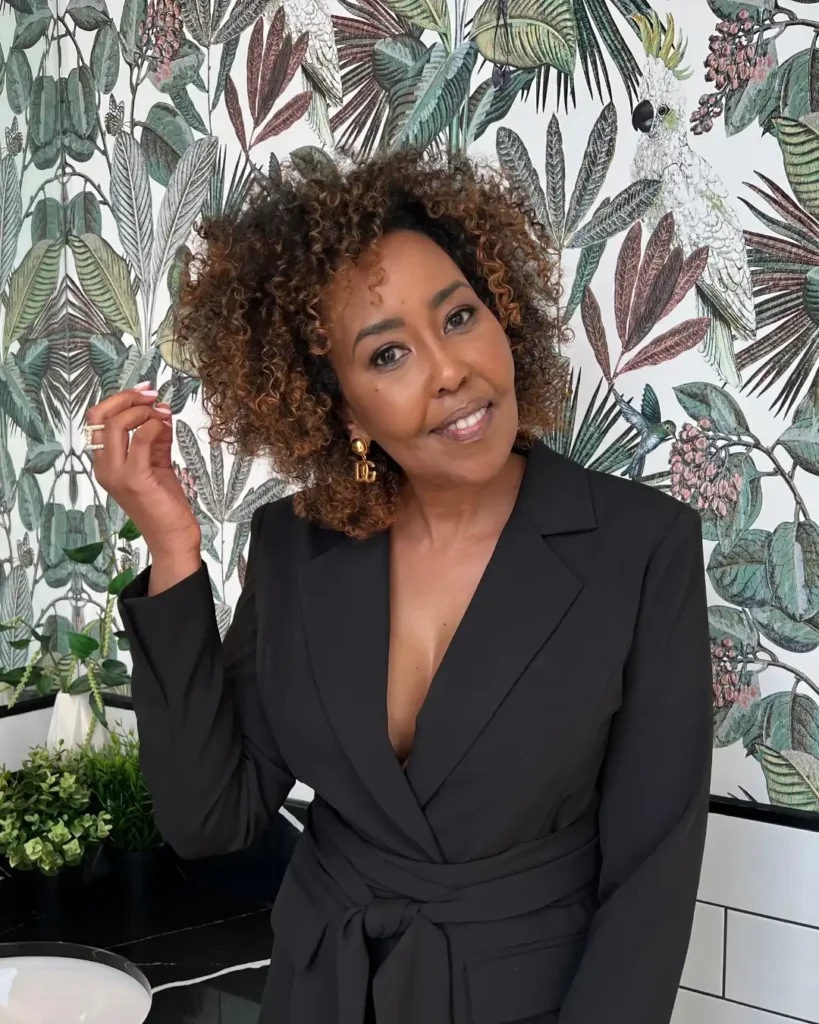
Khatra Paterson, Aesthetic Nurse | Founder of The Hale Private Clinic | Campaigner and Advocate for FGM
Turning Pain Into Purpose
Khatra’s story is not only about survival.
It is about transformation.
Rather than allowing her past to define her limitations, she has built a successful career in the aesthetics industry while using her voice to raise awareness about FGM and support other women.
During her talk, she spoke with honesty and compassion about the importance of education, awareness and creating safe spaces where women feel able to speak about their experiences without shame.
Her message was clear:
Silence protects harmful practices, but conversations can help end them.
It was a powerful reminder that true strength often comes from vulnerability.
The Power of Speaking Out
Events like the Women in Aesthetics Conference celebrate innovation, leadership and the achievements of women within the industry.
But moments like this show that their impact goes far beyond business.
They create spaces where real stories can be shared.
Where difficult conversations can happen.
And where women support one another not just professionally, but personally.
Khatra’s courage in speaking openly about her experience helped bring an important global issue into a room that may never otherwise have had that conversation.
“Behind every successful woman there may be a story of resilience the world has never heard.”

Khatra Paterson Resiliance Pillar Award

Khatra Paterson and Antonia Mariconda, founder of the Women in Aesthetics Conference
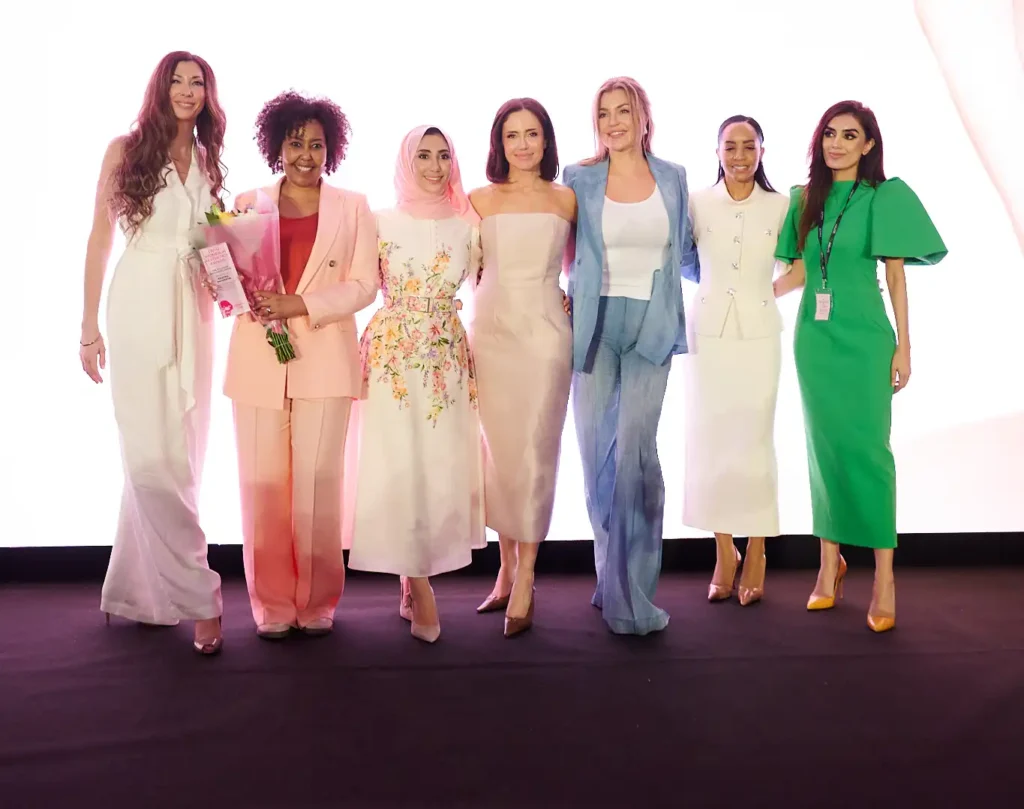
Keynote and guest speakers at the first Women In Aesthetics Conference & Awards 2026: Victoria Vosey, Khatra Paterson, Yusra Al Mukthar, Nina Bal, Linn Emilie, Natasha Berridge, Zoya Awan
Why These Stories Matter
At QueenBee, we believe storytelling has the power to create change.
When women share their experiences openly, it helps others feel less alone. It builds understanding, empathy and awareness.
FGM is still affecting millions of girls around the world today. Raising awareness, supporting survivors and continuing the conversation are essential steps in protecting future generations.
By sharing her story, Khatra is helping to ensure that silence no longer surrounds this issue.
And that more women feel empowered to speak out.
Supporting Survivors:
The Work of Savera UK
Khatra is also a Survivor Ambassador for Savera UK, a leading charity working to end ‘honour’-based abuse (HBA) and other harmful practices, including FGM, forced marriage, spiritual abuse and conversion ‘therapy’.
It provides lifesaving and life-changing services for survivors and those at risk, regardless of age, culture, ethnicity, disability, sexuality, or gender. It also provides help and advice for professionals, training and education and research.
More information can be found at:
https://www.saverauk.co.uk/
Key Facts About FGM
• More than 230 million women and girls worldwide have undergone FGM
• Around 4 million girls are at risk of FGM every year
• Many procedures take place before the age of 15
• FGM has no medical benefit and can cause lifelong health complications
• In the UK, it is estimated that 137,000 women and girls are living with the consequences of FGM
You can download a full free factsheet here:
https://www.saverauklearninghub.co.uk/female-genital-mutilation-fgm-factsheet/
Support & Information
If you or someone you know is affected by female genital mutilation (FGM) or ‘honour’-based abuse, support is available.
Savera UK provides direct intervention services, advocacy and support for survivors.
National helpline: 0800 107 0726 (10am – 4pm, Monday – Friday)
Get help online: https://www.saverauk.co.uk/I-need-help/
If you are at immediate risk, please ring 999
More information can be found at:
https://www.saverauk.co.uk/
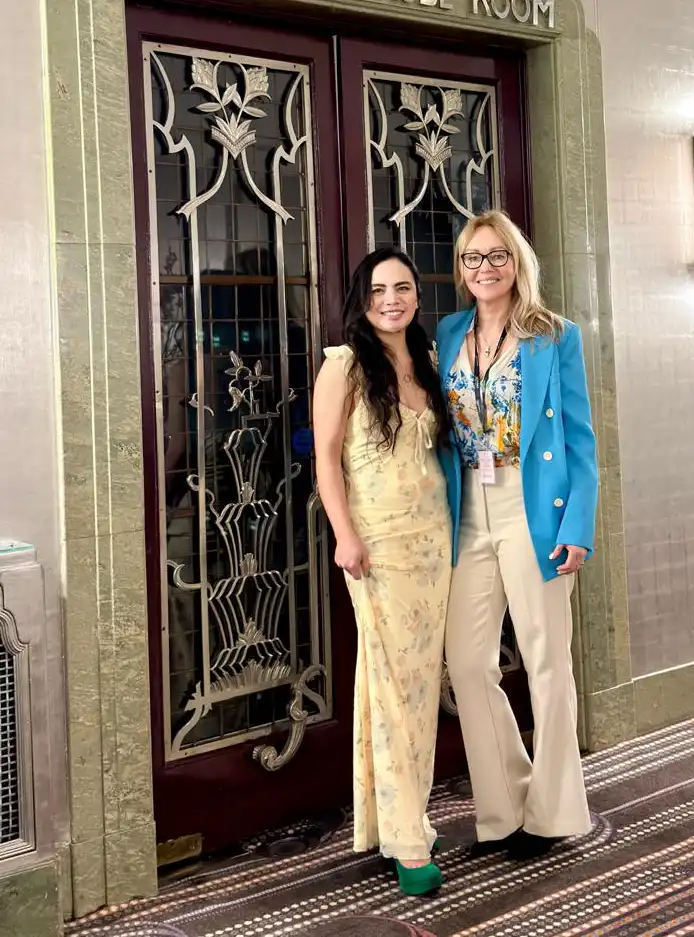
Above: Mauricee Bravo-Hibberd, Founder | Clinical Director & Lead Advanced Nurse Practitioner, The Bravo Group UK and Kathryn Grace, Founder and Publishing Editor, QueenBee magazine.